
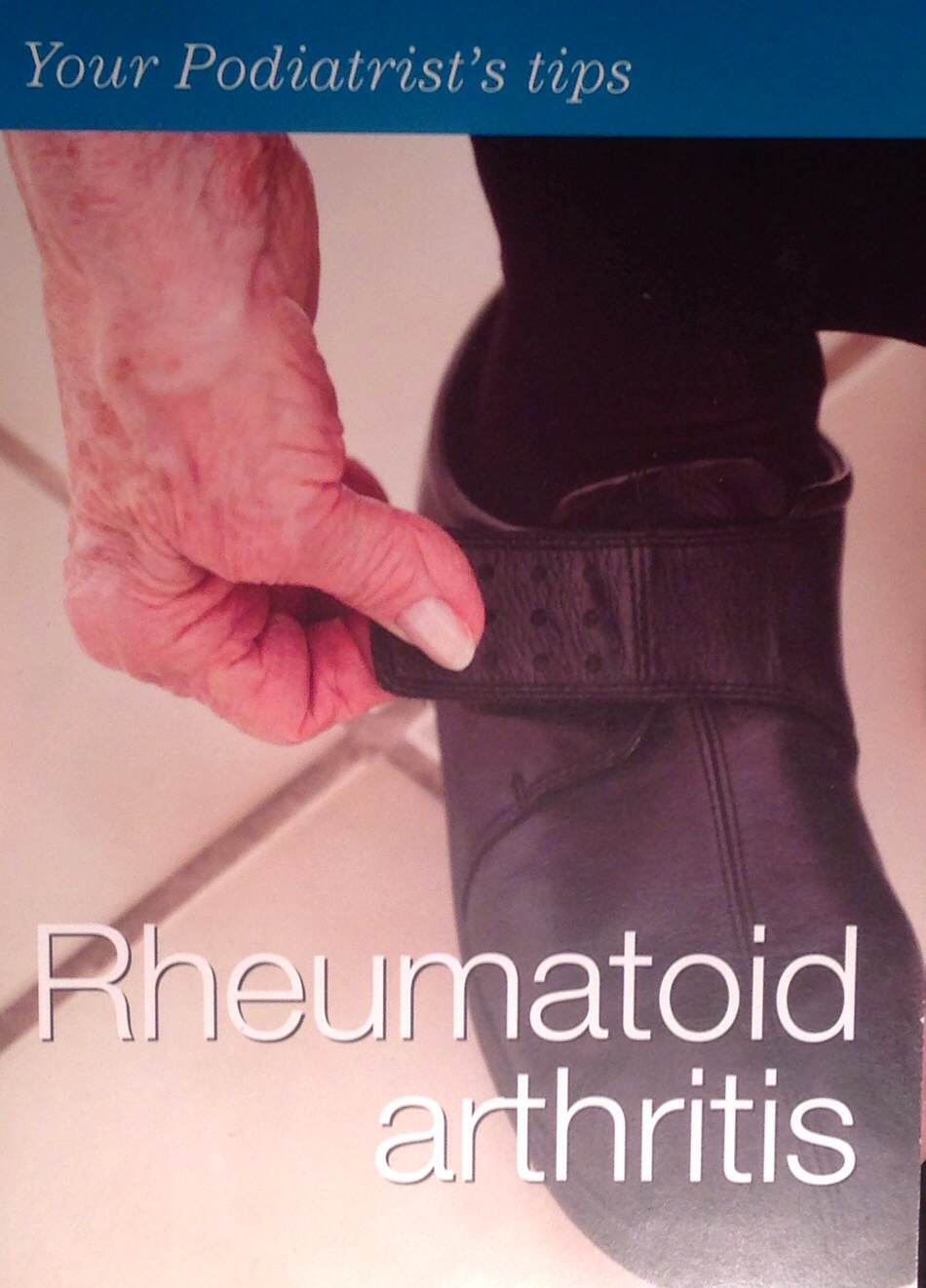
Context: A publications programme that consisted of a suite of post-card size resource on foot health, to be distributed at podiatrist clinics as resources for patients.
Outcome: Clinical take-up of the resources indicates a positive client and patient response to the publications. Patient take-up indicates that the programme succeeded in engaging the target audience.
A good shoe can help relieve pain and keep you mobile if you’ve got rheumatoid arthritis.
Rheumatoid arthritis
When buying shoes look for:
- A stable and supportive heel cup.
- Space around the toes, with an extra-depth toe box or stretch upper to accommodate any changes in the toe.
- Extra padding, especially under the front of the shoe.
- Lightweight and flexible materials in the soles and uppers to help match the shape of the foot.
- Few or minimal seams as these become pressure or friction points.
- Natural fibres, as these tend to reduce the likelihood of developing skin irritations.
- Buckle, laces or Velcro straps to hold the shoe onto your foot so your foot doesn’t have to do the work.
During the fitting process for shoes:
- Make sure there’s enough space (minimum of two cm) between the end of the longest toe and the front of the shoe.
- Ensure the ball of the foot fits comfortably in the widest part of the shoe.
- Do not purchase shoes that require wearing in.
- The heel should fit comfortably and the shoes should not ride up and down on the heel when walking.
- Natural fibres keep the skin healthy.
If you have a problem with your feet, seek advice from your local podiatrist. To find a podiatrist near you, contact the Australian Podiatry Association in your state or findapodiatrist.org or your Yellow Pages for a list of podiatrists near you.
 Alae Taule'alo